LEDs rarely burn out the way a lamp does. Instead, they slowly get dimmer. The real question isn't "when will it fail?" but "how long until it is noticeably less bright?" That is what L70 answers, and heat is the biggest factor in how quickly you get there.
L70, in plain terms
L70 is the number of operating hours until a light source produces 70% of its initial lumen output. Research has shown that most people don't notice a gradual drop of up to about 30%, so 70% became the common end-of-useful-life benchmark. You may also see L80 or L90 for applications that need tighter maintenance of output.
How life is measured and projected
- IES LM-80 is the test method: LED packages are run for thousands of hours at set temperatures and drive currents, and their lumen maintenance is measured at intervals.
- IES TM-21 is the method for projecting that data forward. To keep claims honest, it limits projections to six times the tested duration.
Those tests describe the LED package. Real-world life depends on how hot the LEDs actually run once installed in a channel, in a cove, inside millwork.
Why heat matters so much
An LED converts much of its input power into heat at the chip. If that heat can't escape, the junction temperature rises. Higher junction temperatures speed up lumen depreciation, can shift color over time, and stress the phosphor, the solder joints and the adhesive. The same tape can reach its rated life in one installation and fall short in another, purely because of temperature.
Keeping tape cool
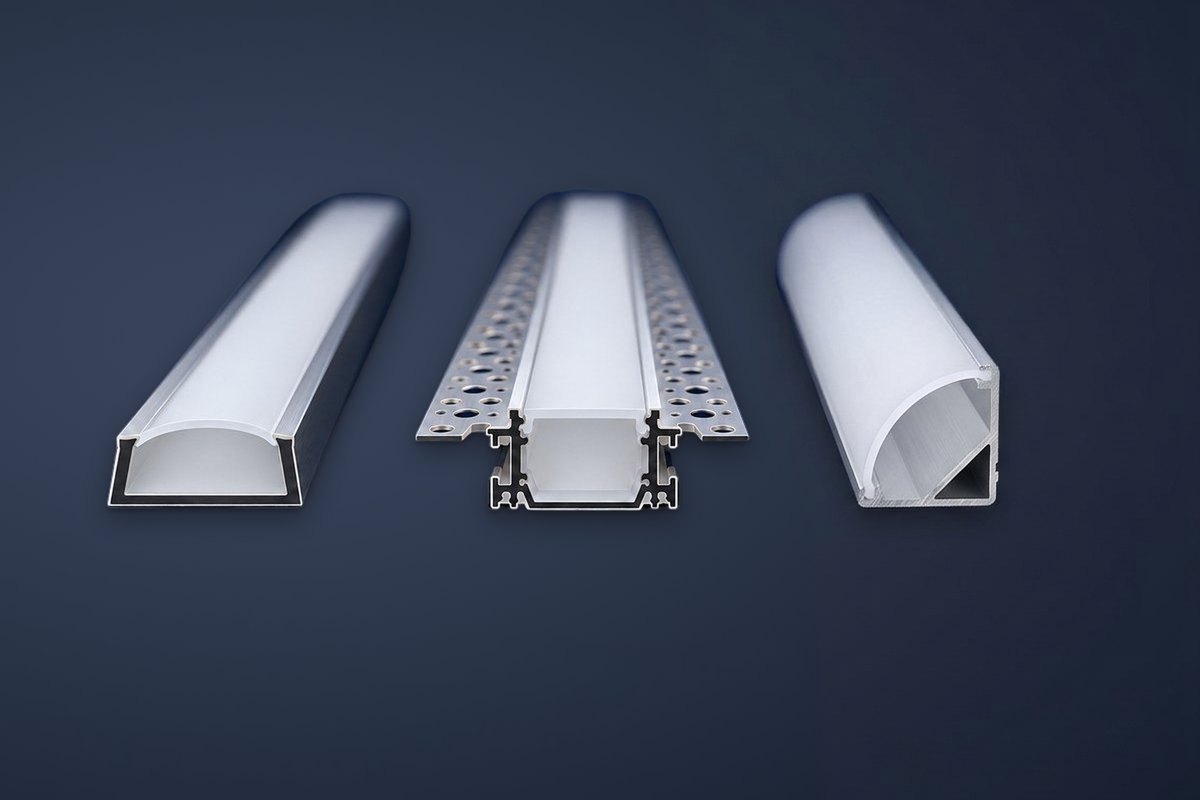
- Mount on aluminum. An aluminum channel is the simplest heat sink. It spreads heat along its length and into the air. Higher-output tape (4 W/ft and up) benefits from it in any enclosed or continuous run.
- Avoid insulation and sealed cavities. Never bury tape or drivers in insulation, and give coves and valances some air movement.
- Stay within the ambient rating. Every tape has a rated ambient range on its spec sheet. Exceeding it can damage LED chips and reduce life, output and color consistency.
- Don't overdrive. Use the correct 24V DC driver and stay within its rating.
- Watch nearby heat sources. Ovens, heating elements, skylights and sun-facing glazing can raise local temperature well above room ambient.
Translating hours into years
At a typical 50,000-hour rated life, how long that lasts depends on how the space is used:
| Use pattern | Hours per year | 50,000 hours lasts about |
|---|---|---|
| Residential, ~4 h/day | 1,460 | 34 years |
| Office or retail, ~12 h/day | 4,380 | 11.4 years |
| Corridors and lobbies, 24/7 | 8,760 | 5.7 years |
For always-on spaces like multifamily corridors, that math makes dimming, occupancy controls and good thermal design worth real money over the life of the building.
Key takeaways
- L70 = hours until output falls to 70% of initial.
- LM-80 tests the LED; TM-21 projects it, capped at six times the test duration.
- Heat is the main driver of lumen loss. Mount in aluminum and avoid insulated, sealed cavities.
- Convert rated hours to years using the real operating schedule.