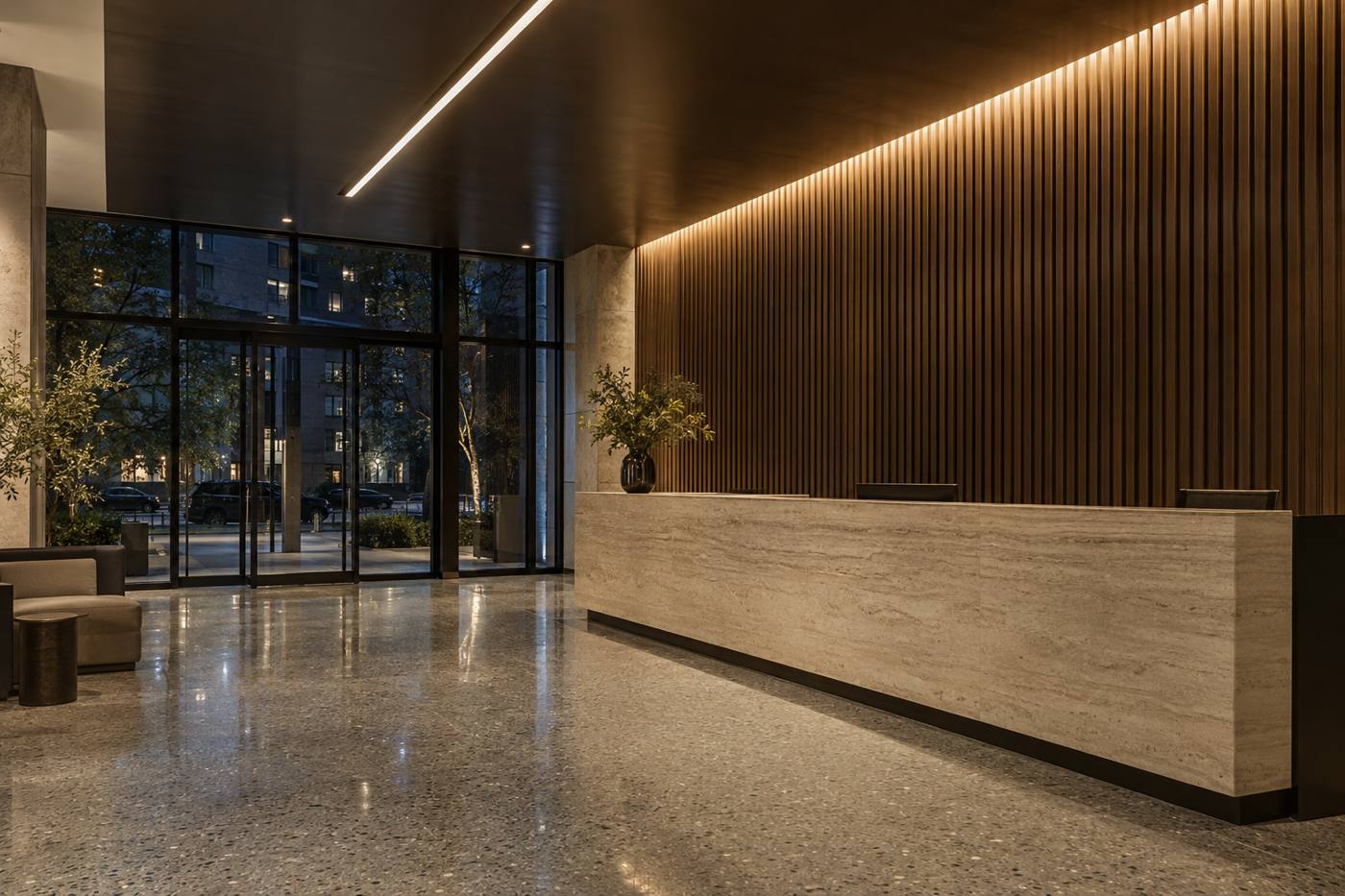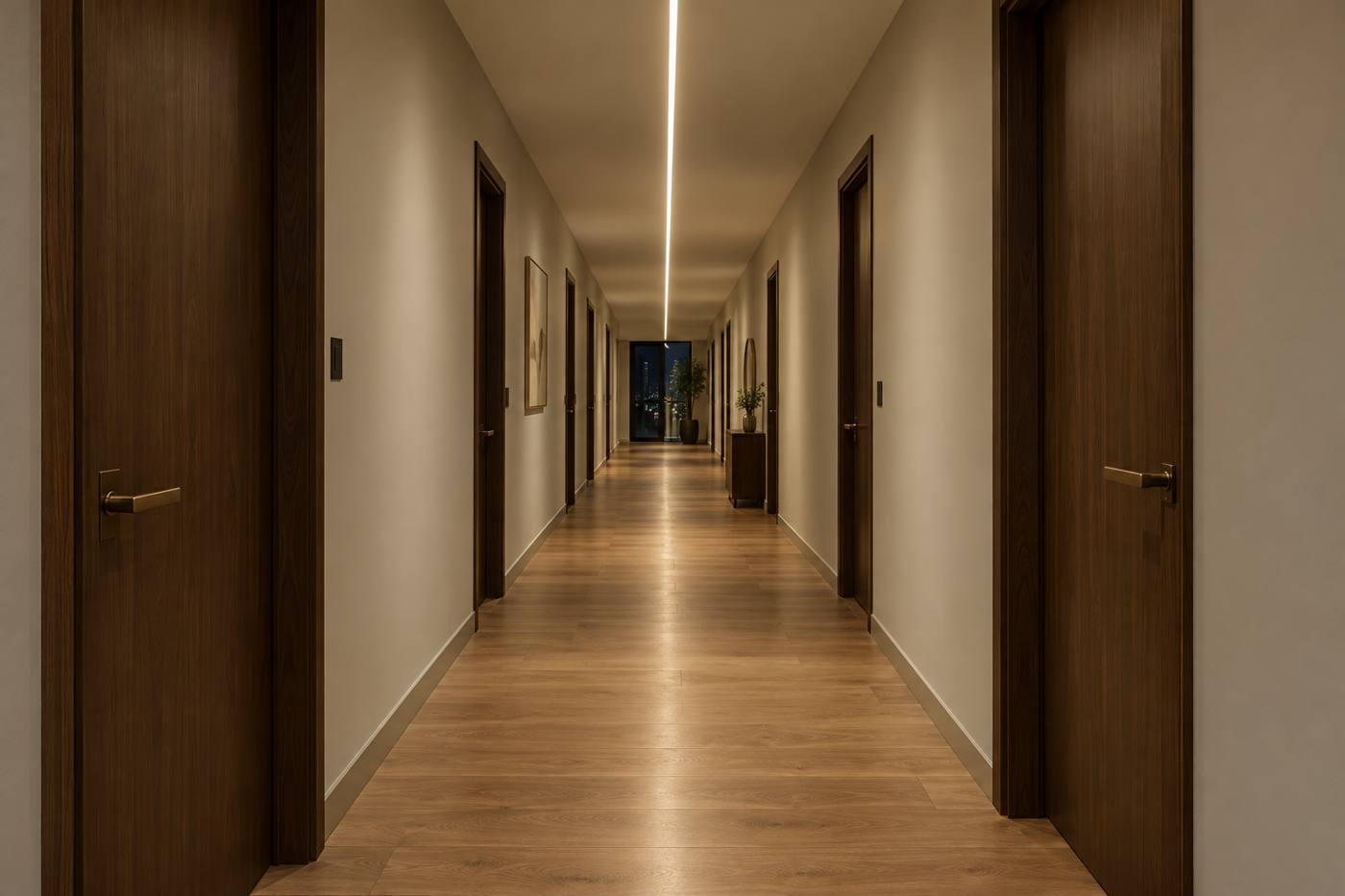
Picture a multifamily corridor with a continuous line of light from the elevator to the last unit door. If one segment is a touch green and the next a touch pink, the eye finds it immediately, even if every reel is labeled 3000K. Color consistency is invisible when it is right and impossible to ignore when it is wrong. It starts with how LEDs are binned.
Why LEDs need binning
No two LED chips come off a production line exactly alike. Small variations in the chip and the phosphor coating shift each LED's color and brightness slightly. Manufacturers measure every LED and sort them into tight groups, called bins, by chromaticity (color point), flux (brightness) and forward voltage. The tighter the bin a tape maker buys and builds from, the more consistent the light.
MacAdam ellipses and SDCM
In the 1940s, David MacAdam mapped how much a color can vary before an observer notices a difference. On a chromaticity diagram, those regions of "looks the same" form small ellipses. Today, color consistency is expressed in steps of these ellipses, also called SDCM (standard deviation of color matching).
| Tolerance | What you'll see |
|---|---|
| 1–2 step | Differences are essentially invisible, even side by side. |
| 3 step | Very difficult to see in normal conditions. The common target for architectural linear light. |
| 4–5 step | Noticeable when segments sit side by side on the same surface. |
| 7 step | Roughly the size of the ANSI C78.377 nominal CCT bins. Clearly visible variation. |
Why linear light is the hardest case
A downlight is a point in space; you rarely see two lit sources side by side on the same surface. A linear run is the opposite. Segments butt directly against each other on a wall or ceiling, often lighting the same plane. Any color mismatch at a joint becomes a visible seam, which is why tight binning matters more for tape than for almost any other luminaire.
Keeping a project consistent
- Order the whole job at once. Tape from one production lot is the most consistent. Phased orders months apart are where mismatches creep in.
- Order attic stock. A small percentage of extra tape from the same lot covers future repairs. Production changes over time, and no manufacturer can guarantee an exact match to tape installed years earlier.
- Don't mix products in one sightline. Even two well-binned tapes from different product families can differ.
- Inspect before closing up. Power each run and look at the joints before lenses and trim go on.
Key takeaways
- LEDs are sorted into bins by color, brightness and voltage; tighter bins mean more consistent tape.
- Consistency is measured in MacAdam steps (SDCM); 3-step is the spec-grade benchmark.
- Linear runs show color seams more than any other fixture type.
- Buy the full project quantity plus attic stock from one lot.